
Bike touring represents one of cycling’s most rewarding adventures—the perfect blend of athletic challenge, personal freedom, and immersive travel. Yet first-time touring cyclists often stumble through preventable mistakes that transform dreams of open-road adventure into frustrating ordeals. After years of touring across continents and helping dozens of riders plan their first multi-day journeys, I’ve identified five critical errors that beginners consistently make, along with practical solutions to help you avoid them.
1. Overpacking: The Weight Penalty That Ruins Tours
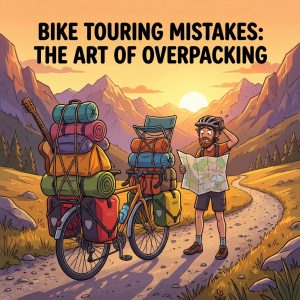
The single most common mistake among beginning bike tourists is bringing far too much gear. There’s an understandable impulse to prepare for every possible scenario—extra clothing for different weather conditions, multiple pairs of shoes, that “just in case” camping equipment, full-size toiletries, and enough spare parts to build a second bicycle. The result? Panniers bulging with 60-80 pounds of gear that transforms every hill into an exhausting grind and makes bike handling dangerously unstable.
Heavy loads don’t just make climbing harder—they stress your frame, wheels, and components while dramatically reducing your daily range and enjoyment. I’ve watched countless beginners abandon tours within days because the physical and mental burden of excessive weight proved overwhelming.
Create a detailed packing list before your first tour, weigh every item, and critically evaluate whether each piece justifies its weight. After your first tour, review what you actually used versus what you carried unnecessarily. Most tourers discover they never touched 30% of what they packed.
2. Inadequate Physical and Mental Preparation
Many beginners dramatically underestimate the physical demands of loaded touring. They might regularly ride 30-40 miles on weekend club rides and assume a fully loaded multi-day tour will feel similar. The reality hits hard on day one when panniers add substantial weight, climbing becomes exponentially more difficult, and the cumulative fatigue of back-to-back riding days compounds quickly.
Equally problematic is inadequate mental preparation. Bike touring involves mechanical problems, unexpected weather, route-finding challenges, occasional loneliness, and moments of serious discomfort. Riders who romanticize the experience without acknowledging its genuine difficulties often quit when reality doesn’t match their Instagram-worthy expectations.
Gradually increase both daily mileage and consecutive riding days. If planning a tour averaging 60 miles daily, train with several back-to-back loaded rides of 50-70 miles. Include significant climbing if your route features elevation gain. Remember that mental endurance develops through experience—short practice tours build the psychological resilience needed for longer expeditions.
Set realistic daily mileage expectations based on your fitness level, terrain, and loaded weight. Most beginning tourers should target 40-50 miles per day maximum, allowing time for rest, sightseeing, mechanical issues, and simply enjoying the journey rather than grinding through purely physical challenges.
3. Neglecting Bike Fit and Gear Selection
Bike fit tolerances that work fine for two-hour weekend rides become sources of genuine pain and injury over consecutive eight-hour touring days. Small discomforts magnify exponentially with time and distance. Additionally, many beginners attempt touring on completely inappropriate bicycles—racing bikes with aggressive geometry, mountain bikes with inefficient rolling resistance, or city bikes lacking proper mounting points for racks and bottles.
Similarly, poor gear choices create unnecessary suffering. Cheap cycling shorts without quality chamois padding, inadequate rain protection, improperly fitted shoes, and bargain-basement panniers that fail under touring stresses all contribute to miserable experiences.
The Solution: Choose the Right Setup
Professional Bike Fit: Invest in professional bike fitting before a major tour, specifically mentioning your touring plans. Touring fit typically involves a more upright, comfortable position than racing geometry. Ensure your saddle height, fore-aft position, handlebar reach, and stem length optimize comfort for long days rather than aerodynamic efficiency.
Appropriate Bike: Choose a dedicated touring bike, sturdy gravel bike, or properly equipped mountain bike. Key features include stable geometry, multiple bottle cage mounts, rack and fender eyelets, durable wheels, lower gear ratios for climbing with weight, and comfortable contact points. Avoid carbon frames and lightweight racing components that weren’t designed for loaded touring stresses.
Quality Gear Investment: Invest in proven, quality gear for items directly affecting comfort: saddle, cycling shorts, gloves, shoes, and rain jacket. These aren’t areas to economize. Conversely, you can budget-shop for items like basic camping equipment or panniers where mid-tier options perform adequately.
4. Poor Route Planning and Unrealistic Expectations
Beginners often plan tours with overly ambitious daily mileage, underestimate how terrain affects loaded cycling pace, or fail to research critical logistics like water availability, camping locations, grocery store spacing, and road conditions. The classic mistake involves plotting a direct route on a map without considering elevation profiles, road surface quality, traffic volumes, or prevailing wind directions.
Another common error is rigidly adhering to predetermined schedules despite weather, mechanical issues, fatigue, or opportunities to explore unexpected discoveries. This self-imposed pressure transforms touring from joyful adventure into stressful obligation.
Research water sources, camping options, bike shops, and supply points along your route. In remote areas, understand exactly where you can refill water bottles and purchase food. Identify bailout options—towns with bus or train stations where you could end your tour early if necessary.
Build flexibility into your schedule. Rather than committing to rigid daily destinations, identify potential stopping points every 15-20 miles, allowing you to adjust based on energy levels, weather, or compelling places you want to explore further. Some of touring’s greatest joys come from spontaneous detours and unplanned rest days in fascinating locations.
Consider supported tours or guided trips for your first experience. These remove logistical stresses while teaching you touring fundamentals that you’ll apply to future self-supported adventures.
5. Ignoring Bike Maintenance Skills and Mechanical Preparedness
Perhaps the most tour-ending mistake involves venturing onto multi-day expeditions without basic mechanical knowledge or appropriate tools and spare parts. When your derailleur hanger breaks 60 miles from the nearest bike shop or you flat twice in one day without sufficient patches and tubes, your tour abruptly ends unless you can self-rescue.
Many beginners don’t know how to fix a flat tire efficiently, adjust derailleurs, true a wobbly wheel, or diagnose and repair common mechanical issues. They also fail to carry essential tools, spare parts, or know how to use what they’ve brought.
Essential Mechanical Skills to Master
Develop fundamental mechanical competency before your tour. At minimum, master these essential skills:
- Fixing flat tires (both tubes and tubeless)
- Adjusting brakes and derailleurs
- Fixing dropped or broken chains
- Truing minor wheel wobbles
- Replacing broken spokes
Assemble a comprehensive tool kit tailored to your bike: multi-tool with allen keys and screwdrivers, chain tool, tire levers, patch kit, spare tubes, spare brake pads, spare derailleur hanger (these break frequently), duct tape, zip ties, and lubricant. If riding tubeless, carry tire plugs and a small pump or CO2 cartridges. Know how to use every tool you carry—during your practice tours, intentionally practice mechanical tasks so they become second nature.
Complete a thorough pre-tour bike inspection or professional tune-up. Replace worn chains, cassettes, brake pads, and tires before departure. Ensure wheels are true, all bolts are properly torqued, and shifting and braking perform flawlessly. Mechanical problems that might be minor annoyances on weekend rides become serious issues when you’re self-sufficient for days at a time.
Learning From Mistakes: The Path to Touring Mastery
Despite best intentions and careful planning, every bike tourist makes mistakes—it’s an inherent part of the learning process. The difference between successful tourers and those who abandon the activity lies not in perfection but in resilience, adaptability, and willingness to learn from inevitable challenges.
Start with shorter, less remote tours where mistakes carry lower consequences. A weekend overnight trip within 50 miles of home provides invaluable lessons without the commitment of a cross-country expedition. Use these experiences to refine your packing list, test gear, identify fitness gaps, and develop problem-solving skills in forgiving environments.
Connect with experienced touring communities through online forums, local clubs, or social media groups. Seasoned tourers generously share knowledge, route recommendations, and encouragement. Reading tour journals and watching touring documentaries provides vicarious learning—studying others’ mistakes helps you avoid repeating them.
Most importantly, maintain perspective about what bike touring fundamentally represents: adventure, freedom, personal challenge, and deep connection with landscapes and communities along your route. Mechanical problems, unexpected weather, and physical discomfort are integral parts of authentic adventure rather than failures to be avoided at all costs.
Your Journey Begins
Bike touring transforms how you experience the world, offering unparalleled freedom to explore at human pace while carrying everything you need on two wheels. By avoiding these five common mistakes—overpacking, inadequate preparation, poor equipment choices, unrealistic planning, and mechanical unpreparedness—you’ll dramatically increase your chances of a successful and enjoyable first tour.
Remember that every accomplished touring cyclist once stood exactly where you are now: excited, slightly nervous, uncertain about whether they possessed the necessary skills and fitness. They learned through experience, made mistakes, adapted, and discovered that bike touring’s challenges pale compared to its profound rewards.
The open road awaits. Pack light, train smart, maintain your bike, plan conservatively, and embrace the adventure with both careful preparation and flexible spontaneity. Your first bike tour won’t be perfect—no tour ever is—but it will be memorable, challenging, and quite possibly the beginning of a lifelong passion for two-wheeled adventure travel.